In today’s world, from education to business, the digital whiteboard with pen has become a powerful tool that takes interactive learning and collaboration to the next level. Unlike traditional whiteboards, these smart panels feature advanced touch-sensitive surfaces combined with a specialized digital pen, enabling users to both write and draw with precision.
The digital whiteboard with pen not only replicates the natural feel of handwriting but also integrates seamlessly with modern digital platforms, allowing real-time sharing, saving, and editing of content. Teachers can make their lessons more engaging and dynamic, while students benefit from a more visual and interactive learning process. At the same time, businesses can use a digital whiteboard with pen in meetings and presentations to improve productivity, brainstorm effectively, and facilitate seamless remote collaboration.
In essence, the digital whiteboard with pen bridges the gap between traditional methods and digital innovation, offering an all-in-one solution for writing, presenting, and collaborating in the modern era.
What is a Digital Whiteboard?
A digital whiteboard is a smart, touch-enabled board system designed to replace traditional whiteboards. Users can write, draw, and interact directly on the surface using either their fingers or a dedicated digital pen. Unlike conventional boards, a digital whiteboard offers advanced features such as saving notes, screen sharing, and real-time collaboration with multiple participants.
What makes the digital whiteboard with pen especially valuable is the natural writing experience it provides. The digital pen simulates the feel of traditional handwriting, allowing users to write smoothly and accurately, as if they were using a real pen on paper. This combination of tactile precision and modern technology makes the device an essential tool for both classrooms and professional environments.
What is a Digital Whiteboard Pen?
A digital whiteboard pen is a specialized writing instrument designed specifically for interactive whiteboards. While it looks and feels like a regular pen, it is engineered to work seamlessly with the digital whiteboard’s touchscreen surface. The pen allows users to write, annotate, draw diagrams, or highlight information with greater accuracy than using a finger.
This tool is one of the most important elements of digital whiteboard with pen technology. In education, it helps teachers explain concepts more effectively through detailed notes and drawings. In design, it enables creators to sketch ideas directly onto the board. And in business presentations, it provides a professional way to annotate slides and emphasize key points in real time. The ability to synchronize handwritten content into a digital format makes the digital pen a game-changer for interactive communication.
What is a Digital Whiteboard for Pen?
The term “digital whiteboard for pen” refers to smart boards that are specifically optimized for use with a digital pen. While some digital whiteboards are limited to finger touch input, models that support pen integration offer a far more precise, natural, and responsive writing or drawing experience.
With a digital whiteboard with pen, users can enjoy pressure-sensitive input, allowing them to vary line thickness and drawing styles just like on paper. This feature is particularly valuable in fields such as education, where teachers need to write equations or detailed diagrams, and in business, where professionals need to sketch complex workflows or highlight critical insights. By combining pen-based interaction with digital functionality, these boards deliver a professional-grade solution that bridges the gap between analog and digital communication.
Advantages of Digital Whiteboard with Pen

Natural Writing Experience
One of the biggest advantages of a digital whiteboard with pen is the natural writing experience it provides. Unlike typing on a keyboard or using only finger touch, the digital pen simulates the feeling of writing on paper. This precision allows users to create smooth lines, accurate notes, and detailed diagrams. For teachers, this means writing equations or annotations effortlessly; for professionals, it ensures presentations and brainstorming sessions look clean and professional.
Digital Note Saving and Organization
A digital whiteboard with pen makes it possible to save all notes, sketches, and presentations in digital format. This eliminates the problem of erasing important information at the end of a class or meeting. Saved notes can be organized into folders, shared with participants, or even edited later. This not only boosts efficiency but also ensures that valuable ideas and lessons are never lost.
Remote Work and Sharing Capabilities
In the age of hybrid and remote work, the digital whiteboard with pen is a powerful collaboration tool. Multiple users from different locations can access the same board in real time, contribute their ideas, and share content instantly. Whether in virtual classrooms or global business meetings, this feature ensures that distance is no longer a barrier to communication and teamwork.
Interactive Learning in Education
For the education sector, the digital whiteboard with pen enhances learning by making lessons more interactive and engaging. Teachers can illustrate concepts dynamically, while students actively participate by contributing directly on the board. The ability to combine handwriting, visuals, and digital content fosters deeper understanding and keeps students motivated.
Fast and Effective Communication in Business
In business settings, speed and clarity are critical. A digital whiteboard with pen allows professionals to explain ideas quickly, visualize strategies, and collaborate effectively during meetings. Instead of relying on lengthy reports or static slides, teams can brainstorm visually, making discussions more dynamic and productive. This leads to faster decision-making and stronger business outcomes.
How to Use a Digital Whiteboard with Pen in Education
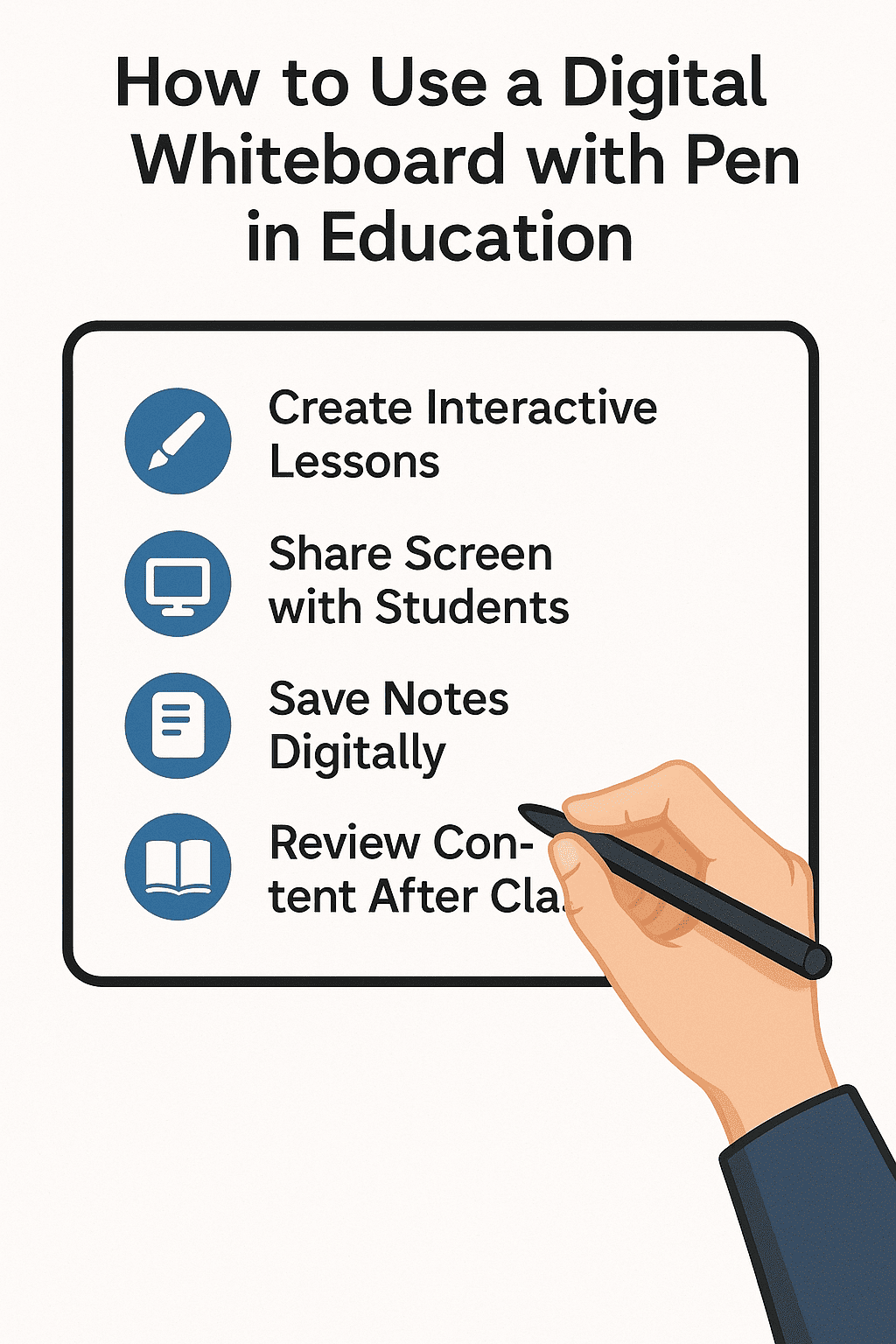
Interactive and Engaging Lessons
A digital whiteboard with pen allows teachers to move beyond traditional chalkboards or static presentations. With real-time writing and drawing capabilities, lessons become more interactive. For example, a math teacher can solve equations step by step, while students watch the process unfold live. Science teachers can illustrate complex diagrams directly on the board, making abstract concepts easier to understand. The combination of visuals and handwriting creates a multi-sensory learning experience that improves student attention and engagement.
Digital Note Saving and Reuse
One of the biggest advantages of a digital whiteboard with pen in education is the ability to save every note, drawing, and annotation. These digital notes can be stored, shared with students, and reused in future lessons. For students, this means they no longer miss out on key information if they cannot keep up with note-taking. For teachers, it means they can build a library of teaching materials that can be refined and expanded year after year. This feature also helps create inclusive classrooms, as students with learning difficulties or absences can easily access lesson content later.
Collaboration Between Teachers and Students
Traditional classrooms often place students in passive roles, but with a digital whiteboard with pen, active collaboration becomes possible. Students can be invited to the board to write, highlight, or add their thoughts. In group projects, teams can brainstorm together by sketching ideas directly on the digital board. This not only enhances engagement but also teaches critical teamwork and communication skills. The interactive nature of the board bridges the gap between teacher-led instruction and student-driven learning.
Remote Learning and Hybrid Classrooms
In today’s world, hybrid and remote learning are becoming increasingly common. A digital whiteboard with pen integrates seamlessly into these environments. Teachers can share the board’s content with students attending online, while remote participants can contribute in real time. This creates a sense of inclusion and ensures that both in-person and remote students receive the same quality of instruction. Digital whiteboards with pen support major learning platforms and video conferencing tools, making them a vital resource in modern education.
Why a Digital Whiteboard with Pen is Important in Business

Enhancing Communication in Meetings
Effective communication is the backbone of successful businesses. A digital whiteboard with pen ensures that complex ideas can be conveyed clearly during meetings. Instead of relying only on PowerPoint slides, professionals can write directly on the digital board to explain strategies, draw flowcharts, or highlight important figures. The ability to switch between pre-prepared slides and live annotations keeps the audience engaged and ensures that information is delivered with clarity.
Brainstorming and Team Collaboration
During brainstorming sessions, creativity often flows best when ideas are shared visually. A digital whiteboard with pen allows teams to quickly jot down thoughts, draw mind maps, or sketch rough prototypes. Because everything is stored digitally, no idea gets lost. Later, these notes can be reorganized, expanded, or shared with the team. Unlike traditional boards, where information is erased at the end of a session, a digital whiteboard with pen preserves every contribution, making follow-ups and project planning far more effective.
Professional Presentations and Remote Work
A digital whiteboard with pen takes professional presentations to the next level. For client meetings, consultants and managers can annotate slides in real time, respond to questions with diagrams, and adapt their pitch dynamically. This level of flexibility demonstrates expertise and professionalism. In industries such as architecture, engineering, or design, the ability to sketch directly onto a presentation provides a competitive edge. Clients feel more involved when they see their feedback visualized instantly on the digital whiteboard.
Supporting Remote and Hybrid Work Environments
As remote and hybrid work models become the norm, a digital whiteboard with pen enables seamless collaboration across distances. Teams working from different locations can access the same board simultaneously, add comments, and update visuals in real time. This eliminates the communication gaps often experienced in remote work. For international businesses, it allows cross-border teams to work together as if they were in the same room, saving time and reducing costs related to travel and coordination.
Conclusion
Whether in classrooms or corporate boardrooms, the digital whiteboard with pen is transforming the way people communicate, learn, and collaborate. Its ability to combine natural handwriting with digital functionality makes it a versatile tool that bridges the gap between traditional methods and modern demands. In education, it supports interactive lessons, digital note-taking, and inclusive learning. In business, it enhances communication, drives collaboration, and supports remote teamwork.
The future of effective teaching and professional collaboration is undoubtedly tied to the capabilities of the digital whiteboard with pen.